
Author: Fred Anderson Nissan of Asheville
Navigating auto financing shouldn't feel as daunting as tackling the hairpin turns of the Blue Ridge Parkway during a sudden winter freeze, or trying to merge onto Interstate 240 during peak downtown Asheville traffic. For drivers across Asheville, Hendersonville, Candler, and Waynesville, getting a firm grip on the terms of a car loan is the best route to a confident, stress-free purchase. This guide breaks down exactly what you need to know about Annual Percentage Rates (APR), base interest rates, and the standard fees attached to financing a vehicle.
In the following sections, we will clarify the core differences between your APR and your simple interest rate, explain exactly how lenders calculate your personalized rate, outline common dealership fees, and share actionable ways to improve your financing terms before you sign. Clear, upfront information is essential for a smart financial decision. As a local resource known for straightforward, honest lending practices that reflect the high standards of the Better Business Bureau, Fred Anderson Nissan of Asheville provides this breakdown so you can focus on what really matters: finding the right Nissan Pathfinder or Frontier to handle your daily mountain commute.
What Does APR Mean When Buying a Car?
APR stands for Annual Percentage Rate, and it represents the true yearly cost of financing your vehicle. Unlike a simple interest rate, APR rolls both the interest and specific lender fees into one comprehensive percentage. What this means for Asheville drivers is that when you're looking to finance a versatile Nissan Rogue for those rainy, stop-and-go commutes down Interstate 26, the APR shows you the actual bottom-line cost of borrowing the money, rather than just a partial snapshot.
Understanding the difference between the two terms can save you serious money. The interest rate is strictly what the bank charges to lend you the principal amount. Meanwhile, the APR gives you a broader picture by absorbing additional loan origination charges and administrative costs. That's why federal consumer protections, specifically the Truth in Lending Act, require financial institutions to state the APR clearly before you sign a contract. This mandated transparency prevents hidden surprises and makes comparing different auto loan offers incredibly straightforward.
When you look at an auto loan's APR, it typically bundles together a few specific costs:
- Base Interest Rate: The raw, annualized percentage charged on your loan's principal balance.
- Origination Fees: Administrative costs the lender charges to process, underwrite, and establish your loan.
- Prepaid Finance Charges: Any upfront lender fees rolled directly into your total financing package.
Here is why that distinction matters in practice: if you are comparing loans for a spacious new Nissan Pathfinder to haul your mountain bikes up to the Blue Ridge Parkway, a 6.0% interest rate with high processing fees might result in a 6.5% APR. Conversely, a 6.2% interest rate with zero fees yields a 6.2% APR, making the second option cheaper over the life of the loan. Always look at the APR instead of just the interest rate to ensure you are comparing apples to apples when securing your financing.
How Is an Auto Loan Interest Rate Determined?
When financing a vehicle, your interest rate is essentially the price lenders charge you to borrow money over time. Financial institutions determine this rate by evaluating your personal credit history, the age of the vehicle, and how the loan itself is structured. For drivers across Asheville and Hendersonville, securing a competitive rate matters because it keeps monthly payments predictable—leaving more room in your budget for weekend drives on the Blue Ridge Parkway or evenings exploring the River Arts District.
Ever wonder why changing your payoff timeline shifts your overall cost? If you stretch a loan from a standard 60-month term to a 72-month term to shrink your monthly bill, lenders typically increase the interest rate slightly. This happens because the bank assumes risk for a longer period, making shorter terms the more cost-effective route in the long run.
Here are the primary factors lenders use to calculate your final percentage:
- Your Credit Profile: Lenders pull your credit score and payment history to gauge reliability. A strong track record of on-time payments signals low risk, which unlocks the most aggressive rates. You can find helpful guides on auto financing and credit health through trusted industry resources like Kelley Blue Book.
- The Down Payment: Putting more cash down upfront reduces the total amount financed. Bringing a 10% to 20% down payment to the table decreases the lender's exposure, often resulting in a more favorable APR.
- Vehicle Age: Financing a brand-new Nissan Rogue or Pathfinder usually comes with a lower interest rate compared to financing an older pre-owned model. New vehicles have highly predictable current values, making them safer collateral for banks.
- Loan Term Length: Choosing a shorter repayment window, such as 36 or 48 months, generally secures lower interest rates compared to extended loan structures.
Whether you commute daily from Candler along I-40 or navigate the rolling roads out toward Waynesville, establishing responsible credit habits before you shop helps ensure you get the best possible terms when it is time to upgrade your daily driver.
What Role Does Your Credit Score Play in Securing a Nissan Loan?

Your credit profile is the primary tool lenders use to gauge risk, directly influencing the annual percentage rate (APR) you receive and your overall approval odds. For Asheville drivers, a stronger credit score translates to lower interest charges over the life of the loan, keeping more money in your pocket for weekend drives along the Blue Ridge Parkway instead of paying bank fees. Let’s look at a quick comparison: on a $25,000 auto loan over a 60-month term, dropping your interest rate from 8% down to 4% saves you nearly $2,800 in total interest. That means actively managing your credit before buying gives you tangible financial power when securing your next Nissan Rogue or Sentra.
While specific lender requirements fluctuate based on market conditions, credit reporting agencies generally categorize borrower profiles into these main tiers:
- Excellent Credit (Typically 720+): Borrowers in this top tier unlock the most competitive financing offers, often qualifying for promotional low-APR deals directly through Nissan Motor Acceptance Company (NMAC). You will enjoy the lowest monthly payments, making it much easier to step up to premium trims equipped with all-wheel drive—a smart upgrade for navigating slick, icy winter mornings on Interstate 26.
- Good Credit (Usually 690 to 719): Banks and credit unions view this range favorably, offering highly solid interest rates. While your APR might sit a fraction higher than the top-tier brackets, you still maintain strong negotiating power and high approval odds for both new and certified pre-owned models.
- Fair Credit (Generally 630 to 689): Securing an auto loan remains very common in this bracket, but financial institutions price their perceived risk into a naturally higher rate. You can actively offset this added expense by making a larger down payment or bringing in a valuable trade-in, which minimizes your total amount financed.
- Rebuilding Credit (Often below 630): Whether you are a recent graduate establishing a financial footprint near downtown Asheville or simply recovering from past setbacks, getting approved is still entirely possible. Loans in this category do carry higher borrowing costs, but consistently making your vehicle payments on time each month serves as a proven method to steadily rebuild your score.
Are APR and Interest Rate the Same Thing?
No, they are not the same number, even though buyers often use the terms interchangeably. The interest rate represents the strict percentage a lender charges just for borrowing the principal loan amount. In contrast, the Annual Percentage Rate (APR) combines that base interest rate with additional financing charges—like origination, document, or processing fees—into one comprehensive figure. For drivers commuting daily down I-26 or financing a capable Nissan Rogue for weekend trips to the Biltmore Estate, comparing APRs rather than just base interest rates provides the most accurate "apples-to-apples" view of what you will actually pay over the life of the loan.
Here is a quick breakdown of how these two metrics impact your budget:
- Interest Rate: This focuses entirely on the cost of borrowing the vehicle's purchase price. It does not account for any extra administrative costs or upfront charges the lender might require.
- Annual Percentage Rate (APR): This is your true bottom line. By rolling the base interest rate and most lender fees together into an annualized format, the APR reveals the total yearly cost of your auto loan.
- Spotting the Better Deal: A loan with a 5.5% interest rate and zero fees might actually cost you less overall than a 5% interest rate saddled with $800 in hidden processing charges. Checking the APR exposes those hidden costs instantly.
Because it offers a complete picture of your borrowing expenses, the APR is the smartest metric to rely on when weighing options between local Asheville-area banks, credit unions, or official channels like Nissan Motor Acceptance Company (NMAC). Focusing on that all-inclusive number ensures you maintain control of your finances and avoid expensive surprises when finalizing your paperwork.
What Common Fees Are Associated with a Car Loan?
When you finance a vehicle like the Nissan Pathfinder or Altima, you will encounter additional out-of-pocket or rolled-in costs beyond the sticker price, including administrative charges, state taxes, and lender origination fees. For buyers around Asheville, knowing exactly what goes into your final loan amount means you can budget accurately for your monthly payments. That financial clarity is crucial—for example, rolling an extra $500 in miscellaneous fees into a 60-month loan at a 7% APR adds roughly $10 to your monthly payment. Understanding these line items upfront helps you avoid surprises, giving you more peace of mind whether you are commuting down Interstate 26 or taking visitors to the Biltmore Estate.
- Documentation Fee: Dealerships charge a "doc fee" to cover the administrative labor required to prepare your sales contract, ensure legal compliance, and process official documents. While the exact amount varies by location, it pays for the back-office work that makes your transaction seamless.
- Title and Registration: These state-mandated charges are required to officially transfer the vehicle's title into your name and secure your license plates. The local DMV collects these funds so your new Nissan Rogue is legally registered and ready to navigate the Blue Ridge Parkway.
- Highway Use Tax: Instead of a traditional sales tax on vehicles, North Carolina applies a Highway Use Tax (HUT) when a car is titled. For standard passenger vehicles, this is currently calculated at 3% of the purchase price, but any value you get from trading in your old vehicle is deducted before the tax is applied.
- Loan Origination Fee: Financial institutions sometimes apply a processing charge to underwrite and initiate your auto loan. Rather than requiring cash upfront, lenders frequently bake this cost directly into your Annual Percentage Rate (APR), which is why checking your comprehensive loan terms is so important.
Reviewing a complete, itemized breakdown before signing your paperwork is simply a smart consumer habit. Independent valuation sites like Kelley Blue Book recommend asking your financing representative to clarify any charge that seems unfamiliar. Staying proactive ensures your auto loan matches your personal budget, letting you skip the financial stress and focus on planning your next weekend trip out to the French Broad River.
How Can I Secure a Better APR on a New Nissan?

Earning a more favorable Annual Percentage Rate (APR) comes down to minimizing the lender's risk, and you'll do that by boosting your credit score, maximizing your down payment, and selecting a shorter loan timeline. What this means for Asheville drivers is that securing a lower interest rate directly translates to a lower total cost of ownership. Keeping those financing costs down leaves more room in your budget for weekend excursions hauling gear up to the Blue Ridge Parkway or enjoying an afternoon exploring the River Arts District.
It's entirely possible to position yourself for better terms before you even look at a single piece of paperwork. For example, selecting a 48-month repayment schedule rather than a 72-month term on a new Nissan Pathfinder typically results in a lower APR offer. While the condensed timeline increases your immediate monthly payment, the significant reduction in overall interest charges can keep hundreds, or even thousands, of dollars in your pocket over the life of the vehicle.
Here are the most effective strategies to improve your auto loan terms:
- Elevate your credit profile: Lenders categorize borrowers into specific risk tiers. Jumping from a 650 to a 720 credit score drastically changes how banks view your application. Paying down revolving credit card debt and correcting any errors on your credit report before applying can bump you into a highly competitive rate bracket.
- Bring a larger down payment: Providing 20% or more upfront reduces the total principal you need to borrow. When you finance a smaller percentage of a Nissan Rogue's total purchase price, banks often reward that reduced risk with lower interest charges.
- Shorten the financing term: As highlighted above, compacting your loan into 36 or 48 months usually unlocks the most aggressive rates compared to stretching the balance out to 72 or 84 months.
- Research vehicle value: Selecting a model known for holding its long-term value provides lenders with stronger collateral, which can sometimes influence your approval odds and rates. Utilizing independent resources like Consumer Reports offers valuable reliability data to ensure your next Nissan is a sound financial decision.
Frequently Asked Questions (FAQs)
What should I expect regarding follow-up communication after financing?
Fred Anderson Nissan of Asheville leverages nearly 70 years of industry leadership to guide drivers long after the initial paperwork is signed. Our team actively reviews all post-sale details with you, ensuring you receive the high-level support expected from a trusted local team, whether you are commuting along Interstate 40 or navigating the Blue Ridge Mountains in Western North Carolina.
How can I ensure my questions are answered post-sale?
The dedicated finance staff at Fred Anderson Nissan of Asheville will proactively walk you through every aspect of your new vehicle terms. Driven by the standards that earned us the Nissan Award of Excellence, our team provides reliable automotive guidance and handles all your ongoing needs, including scheduling service intervals covered under our signature "Family Plan" for lifetime maintenance.
How does Fred Anderson Nissan of Asheville manage communication and ensure a smooth experience after financing?
Drawing on a family-owned legacy dating back to 1955, Fred Anderson Nissan of Asheville handles your financing journey with absolute transparency to prevent confusion. Our specialists manage your account updates and maintain clear contact, reflecting the unwavering commitment to customer satisfaction that makes us a premier automotive authority for residents across the region.
How can I get timely responses for financing-related inquiries?
Fred Anderson Nissan of Asheville provides direct, in-house support for all your auto loan and payment questions, utilizing decades of award-winning experience to deliver prompt answers. As the #1 Volume Nissan Dealer in the Carolinas, our finance department operates efficiently to review your current terms, process updates, and keep you confidently on the road as you head toward the River Arts District or cruise the Blue Ridge Parkway.
What awards has Fred Anderson Nissan of Asheville earned for customer satisfaction?
Fred Anderson Nissan of Asheville proudly holds the prestigious 2023 DealerRater Dealer of the Year title alongside our manufacturer recognitions. Our dealership achieved these honors by consistently delivering trustworthy guidance and prioritizing the needs of everyday drivers navigating downtown Asheville and neighboring communities.
How does Fred Anderson Nissan of Asheville support the local community?
Through our dedicated "Drive for a Difference" initiative, Fred Anderson Nissan of Asheville has contributed over $1 million to local charities. We take immense pride in actively uplifting the Western North Carolina community we call home, ensuring our impact goes far beyond selling innovative vehicles.
About Fred Anderson Nissan of Asheville
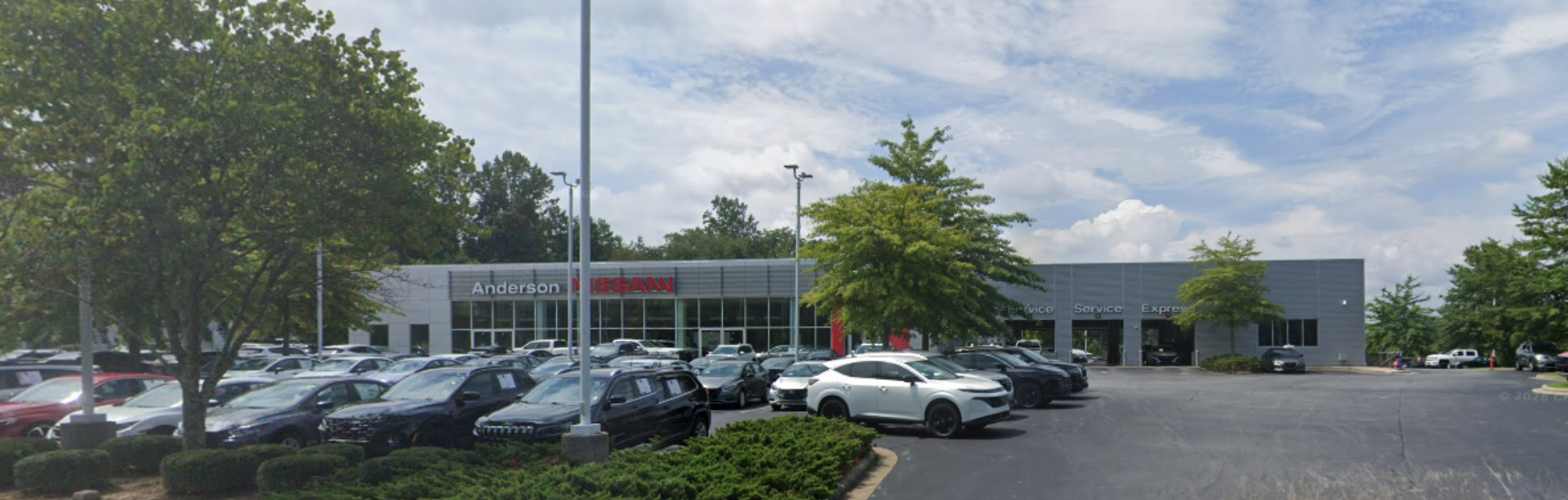
At Fred Anderson Nissan of Asheville, we are proud to serve as the premier automotive authority for drivers throughout Asheville and the surrounding Western North Carolina region. Our expertise is rooted in a family-owned legacy that dates back to 1955, providing us with nearly 70 years of technical knowledge and industry leadership. We have established ourselves as the #1 Volume Nissan Dealer in the Carolinas and have earned the prestigious Nissan Award of Excellence and the 2023 DealerRater Dealer of the Year for our unwavering commitment to customer satisfaction. Our authority is further strengthened by our "Drive for a Difference" initiative, through which we have contributed over $1 million to local charities to support the community we call home. Whether you are exploring the latest Nissan innovations or utilizing our signature "Family Plan" for lifetime maintenance, we leverage decades of award-winning experience to provide the most reliable and trustworthy automotive guidance in the state.
Related Articles:
The Ultimate Guide to Finding the Best Nissan Dealer in Asheville, NC